Common Shingle Nailing Mistakes: A Master Guide to Roof Integrity
The structural integrity of an asphalt shingle roof is often perceived as a matter of material quality or the chemical composition of the adhesive strips. While those factors are significant, the mechanical bond—the humble roofing nail—serves as the primary line of defense against the kinetic energy of high-speed winds and the constant pull of gravity. A single asphalt shingle is an engineered composite designed to shed water and resist UV degradation, but its performance is entirely predicated on a specific installation geometry. When that geometry is compromised, even the most expensive architectural shingle becomes a liability rather than an asset.
Precision in fastening is not merely a cosmetic concern or a minor technicality found in the fine print of a manufacturer’s manual. It is a fundamental requirement of building physics. A shingle that is improperly fastened enters a state of structural instability the moment the installer moves to the next course. In many cases, the roof may appear pristine from the ground, masking latent defects that will only manifest during a significant meteorological event or as the roof ages and the shingles lose their initial flexibility.
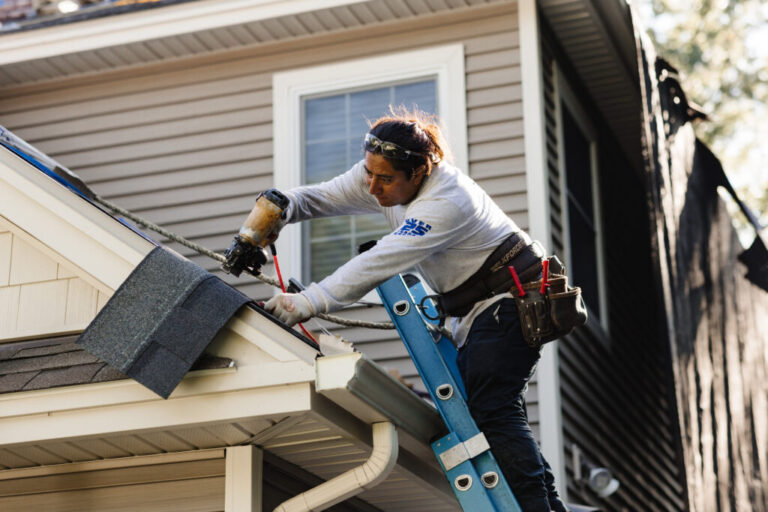
The complexity of the nailing process is compounded by the speed of modern residential construction. High-pressure pneumatic nail guns allow for a pace of installation that far outstrips the human eye’s ability to verify every fastener without intentional pauses. This disconnect between velocity and accuracy is where most systematic failures originate. This article serves as a technical post-mortem and a proactive guide, analyzing the mechanical nuances of the fastening process and the long-term structural consequences of deviation from established standards.
Understanding “common shingle nailing mistakes.”
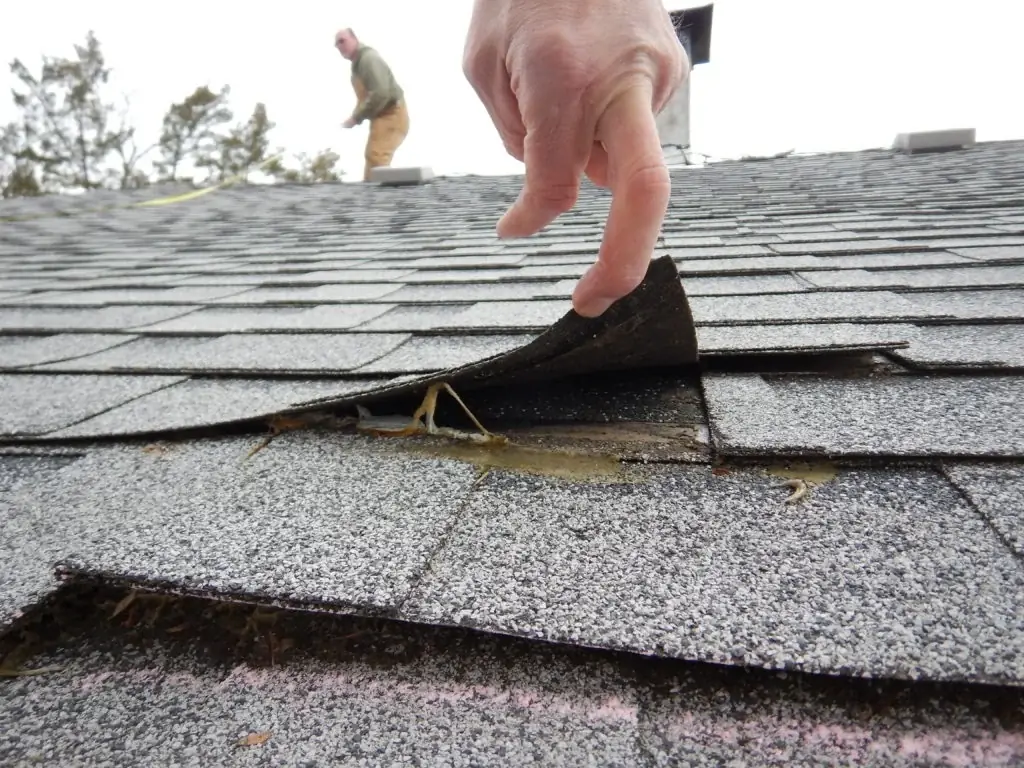
To define the scope of common shingle nailing mistakes, one must first understand that a shingle is not a monolithic object; it is part of an overlapping assembly. The most egregious misunderstanding in the industry is the belief that as long as a nail “hits” the shingle, it is doing its job. In reality, a shingle has a designated “common bond” area—the narrow strip where the top and bottom layers of a laminated shingle overlap. If a nail misses this zone, it only secures a single layer of the material, effectively halving the shingle’s pull-through resistance.
Oversimplification of the nailing process frequently leads to “high-nailing,” where fasteners are placed too far above the sealant strip. This error is pervasive because it is easier for an installer to nail higher up to avoid the sticky sealant, but this practice bypasses the structural reinforcement of the course below. Conversely, “low-nailing” places the fastener in the exposed portion of the shingle, creating an immediate conduit for water infiltration.
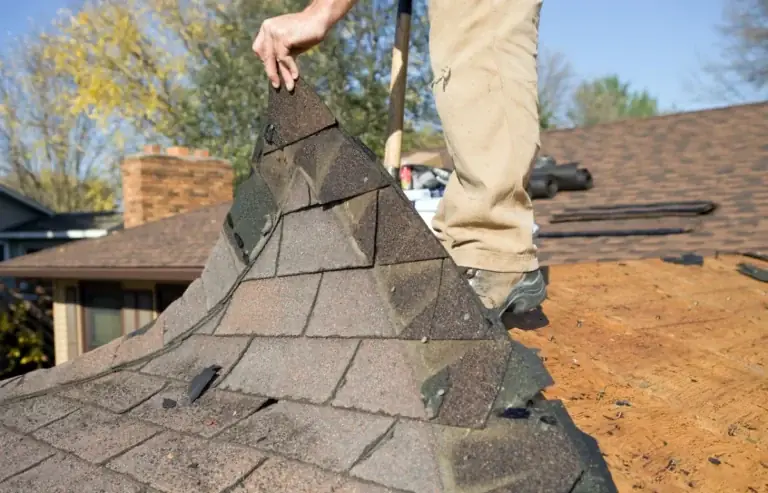
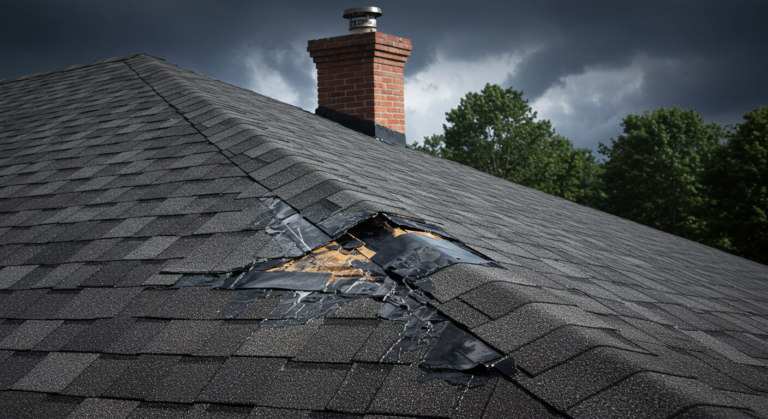
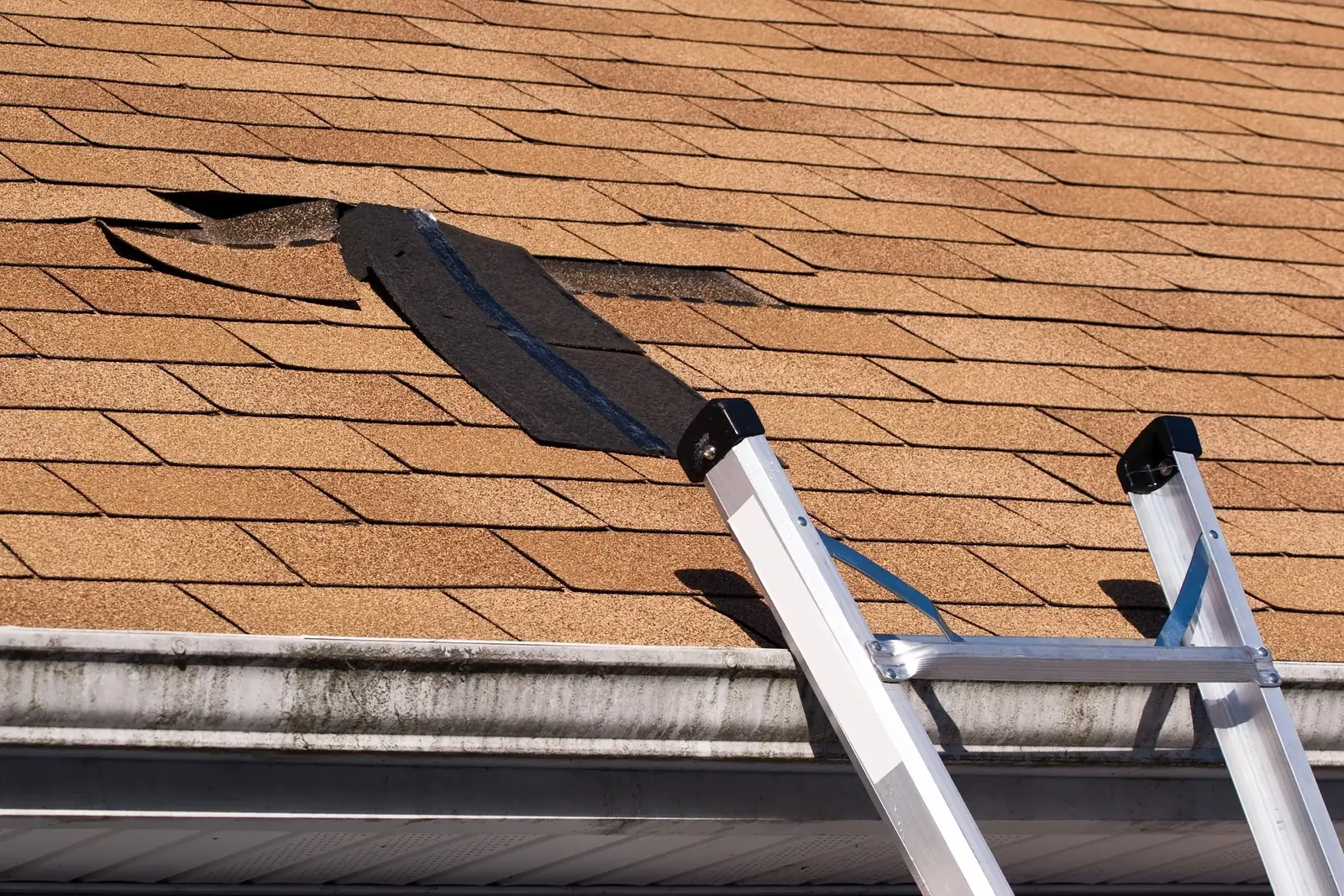
The risk of these mistakes is rarely immediate. A poorly nailed roof can pass a visual inspection and remain watertight during a gentle rain. The failure is typically a “threshold event”—it occurs when wind speeds reach a specific velocity that overcomes the weakened mechanical bond, leading to catastrophic “blow-offs.” Furthermore, manufacturers are increasingly using forensic analysis to deny warranty claims; if they find evidence of improper fastening, the multi-decade warranty becomes void, leaving the property owner with the full cost of a premature replacement.
Deep Contextual Background: The Evolution of the Bond
Historically, roofing was a slow, tactile trade. In the era of hand-driven nails, a roofer felt the resistance of the wood deck through the hammer. If a nail hit a knot or missed a rafter, the tactile feedback was immediate. The transition to pneumatic nail guns in the late 20th century revolutionized production but introduced a layer of abstraction. The roofer no longer “feels” the deck; they hear a percussion and see a result.
As shingles evolved from simple organic mats to complex multi-layered fiberglass laminates, the requirements for their attachment became more stringent. Modern shingles are heavier and stiffer, placing more stress on each fastener. Additionally, the introduction of “speed zones” or “strike zones”—wider areas on some shingle brands designed to make nailing easier—has inadvertently created a sense of complacency. Installers may believe these wider zones allow for a margin of error that the physics of wind uplift simply does not support.
Systemically, the industry has seen a push toward higher “wind ratings” (Class H, 150 mph), but these ratings are laboratory-tested under perfect nailing conditions. The disconnect between laboratory testing and field reality is the primary driver of premature roof failure in the 21st century.
Conceptual Frameworks for Fastener Integrity
To analyze the fastening process, we can utilize several mental models:
-
The Fulcrum Principle: View the shingle as a lever. If the nail (the fulcrum) is placed too high, the wind has a longer lever arm to lift the bottom edge of the shingle. The higher the nail, the greater the mechanical advantage the wind has to tear the shingle off the fastener.
-
The Shear vs. Pull-Through Model: Fasteners must resist two forces: shear (the shingle sliding down the roof) and pull-through (the shingle being lifted vertically over the nail head). Most common shingle nailing mistakes compromise pull-through resistance far more than shear resistance.
-
The Systemic Redundancy Theory: A roof is a series of interconnected shingles. If one shingle is high-nailed, it doesn’t just put that shingle at risk; it removes the “clamping force” that the shingle should have provided to the course beneath it. Failure is often contagious across the roof deck.
Primary Categories of Nailing Deviations
Variations in nailing errors can be categorized by their mechanical impact on the roof assembly.
| Error Type | Description | Mechanical Consequence | Long-Term Result |
| High Nailing | Nails are placed above the manufacturer’s nail line. | Misses the “common bond” layer; high leverage for wind. | Shingle blow-offs; voided warranty. |
| Under-driving | The nail head sits above the shingle surface. | Prevents the course above from sealing properly. | Wind-driven rain infiltration; sealant failure. |
| Over-driving | The nail head pierces through the fiberglass mat. | Reduces pull-through resistance to near zero. | Shingles slide off the deck; immediate structural weakness. |
| Crooked Nailing | Nails are driven at an angle rather than perpendicular. | One side of the nail head cuts the mat; poor seat. | Water seepage along the nail shank; rot in the deck. |
| Inadequate Count | Using 3 or 4 nails where 5 or 6 are required (High-Wind). | Concentrates the load on too few points. | Systematic failure during storms. |
Realistic Decision Logic
When an inspector or foreman identifies these errors, the decision to “repair or replace” depends on the density of the mistakes. If high-nailing is found in more than 10% of a sampled area, the systemic integrity of that slope is considered compromised. Patching individual shingles is often insufficient because the process of lifting shingles to fix nails can break the factory-applied sealant strips, creating a new failure point.
Detailed Real-World Scenarios
Scenario 1: The High-Pressure Production Failure
A large-scale roofing contractor is pushing to complete three “squares” (300 sq. ft.) per hour. The installers are using pneumatic guns set to 120 PSI, which is too high for the soft OSB (Oriented Strand Board) deck.
-
Outcome: Over-driving occurs on 40% of the fasteners. The nail heads sink completely through the top layer of the laminate.
-
Second-Order Effect: Two years later, during a standard thunderstorm with 50 mph gusts, the shingles begin to “unzip” from the bottom up, despite no shingles being physically broken.
Scenario 2: The “Cold Start” Sealant Issue
A roof is installed in late autumn. Because the shingles are cold and stiff, the roofer high-nails to make the shingles lay flatter.
-
Outcome: The sealant strips never fully bond because the shingles aren’t held tight enough to the deck to create the necessary friction and heat.
-
Failure Mode: Winter winds get under the shingles, driving snow into the nail holes, leading to interior ceiling leaks during the first spring thaw.
Economics: The Cost of Improper Fastening
The financial implications of common shingle nailing mistakes are rarely factored into the initial bid of a low-cost contractor. However, the lifecycle cost of a poorly nailed roof is exponentially higher.
| Cost Variable | Properly Nailed Roof | Improperly Nailed Roof |
| Initial Labor | Standard | Reduced (due to speed) |
| Maintenance | Negligible (15+ years) | High (leaks, repairs) |
| Insurance Impact | Standard premiums | Potential claim denial |
| Lifespan | 25–30 Years | 7–12 Years |
| Total Cost of Ownership | 1x | 2.5x (includes tear-off and early re-roof) |
Tools, Strategies, and Technical Support Systems
Precision in nailing is a combination of equipment calibration and technician training.
-
Compressor Regulation: Tools must be adjusted to the specific density of the roof deck. A compressor set for plywood will overdrive nails into OSB.
-
Depth-of-Drive Adjusters: Modern pneumatic guns have thumbwheels to control nail depth. This tool is the single most effective defense against over-driving.
-
Chalk Lines for Nailing: On high-slope roofs, snapping a horizontal line for nail placement ensures the “common bond” is hit every time.
-
Forensic Shingle Gauges: Inspectors use these to verify shingle thickness and fastener placement without destructive testing.
-
Perpendicular Driving Technique: Ensuring the gun is 90 degrees to the deck prevents the nail head from cutting into the asphalt.
Risk Landscape: Taxonomy of Failure Modes
The risk of improper nailing is a compounding one. It rarely results in a single failure but rather a cascade of issues.
-
Fastener Back-out: An angled or under-driven nail will eventually “back out” due to the natural expansion and contraction of the wood deck. The nail head then pokes through the shingle above it, creating a “crown leak.”
-
Deck Rot: Crooked nails or “low nails” allow water to travel down the shank. Over time, the wood around the nail rots, losing its “withdrawal resistance.” This makes the nail useless even if the shingle stays intact.
-
Warranty Litigation: In the event of a catastrophic storm, insurance companies and manufacturers often engage in a “battle of the experts.” If high-nailing is documented, the property owner is often the one left without coverage.
Governance, Maintenance, and Long-Term Adaptation
For property managers and homeowners, long-term adaptation involves moving beyond the “set it and forget it” mentality.
-
The First-Year Audit: A professional inspection one year after installation can identify shingles that have failed to seal or fasteners that are beginning to back out.
-
Wind-Event Monitoring: After any wind event exceeding 45 mph, a visual check for “tab uplift” (shingles that don’t lay flat) is necessary. This is a leading indicator of high-nailing.
-
Nail-Pop Remediation: If a nail backs out, it should be removed, the hole sealed with roofing cement, and a new nail driven in a different location within the strike zone.
Measurement, Tracking, and Evaluation
Quantifying the quality of a roofing installation involves both destructive and non-destructive signals.
-
The Pull Test: During installation, a supervisor should occasionally attempt to lift a shingle tab. If it lifts with minimal resistance before the sealant has set, the fastener placement is suspect.
-
Fastener Density Mapping: On a commercial or large residential project, documenting the number of nails per shingle (e.g., “6-nail pattern”) via photo-documentation is a critical lagging indicator for insurance purposes.
-
Leading Signal (PSI Consistency): Tracking the air pressure consistency of the crew’s compressors throughout the day. Pressure drops as more guns are added, leading to under-driven nails.
Common Misconceptions and Oversimplifications
-
Myth: “The glue (sealant) is what keeps the roof on.” Fact: The sealant is for wind resistance; the nails provide the structural attachment. Sealant without proper nailing will eventually fail.
-
Myth: “More nails are always better.” Fact: Over-nailing can “Swiss cheese” the shingle and the deck, actually reducing the structural integrity of the wood.
-
Myth: “Architectural shingles don’t have a nail line.” Fact: Every shingle has a designated fastening zone; architectural shingles simply have a “common bond” area that is even more critical than on 3-tab shingles.
-
Myth: “If the roof doesn’t leak, the nailing is fine.” Fact: Nailing errors are often structural, not just hydraulic. A roof can be dry but ready to blow off in the next storm.
Ethical and Contextual Considerations
There is an ethical dimension to the roofing trade that revolves around “hidden work.” Because nailing is covered by the subsequent course of shingles, the roofer is essentially working on their honor. In high-wind coastal zones, improper nailing is not just a financial risk; it is a safety hazard. Shingles becoming airborne projectiles during a hurricane can cause significant property damage and bodily harm. Quality governance in roofing is, therefore, a matter of public safety.
Conclusion: Synthesis and Editorial Judgment
The persistence of common shingle nailing mistakes is an indictment of the “speed over substance” culture that has permeated the residential construction industry. A roof is only as strong as its weakest fastener, and the margin for error is significantly narrower than most installers realize.
True topical authority in roofing requires acknowledging that the material is only half of the equation; the mechanical application is the other. For the homeowner, the defense is education and the demand for documented quality control. For the professional, it is a return to the fundamentals of building science—understanding that 1/4 of an inch in nail placement can be the difference between a 30-year asset and a 5-year disaster.