Top Clay Tile Options: A Master Guide to High-Performance Roofing
The use of terra cotta in architectural envelopes is perhaps the most enduring testament to human material science. While modern synthetic membranes and metal alloys boast of impressive laboratory-tested lifespans, clay tile remains one of the few roofing mediums with a proven service life measured in centuries rather than decades. This longevity is not merely a product of the material’s inert nature, but of its unique relationship with thermal dynamics and moisture management. As contemporary architecture pivots back toward sustainability and low-carbon footprints, the analysis of clay tile moves from a discussion of Mediterranean aesthetics to one of high-performance building physics.
Selecting the appropriate tile profile and composition requires an understanding of the intersection between geology and geometry. Not all clay is created equal; the mineralogical makeup of the raw earth, the temperature of the kiln, and the duration of the firing process dictate the tile’s porosity, compressive strength, and resistance to freeze-thaw cycles. Consequently, a tile that performs flawlessly in the arid heat of Andalusia might fracture within three winters in a temperate climate like the American Midwest if the internal vitrification is insufficient.
Beyond the unit itself, the clay tile roof is a complex assembly. It functions as a ventilated rainscreen rather than a simple waterproof barrier. The air space created by the tile’s profile allows for convective cooling, reducing the heat flux into the building’s interior. However, this same openness requires a sophisticated underlayment system to manage the water that inevitably migrates past the primary tiles during wind-driven rain events. To evaluate the market today, one must look at the system holistically, balancing the weight of the material against the structural capacity of the deck and the specific climatic stressors of the site.
Understanding “top clay tile options.”
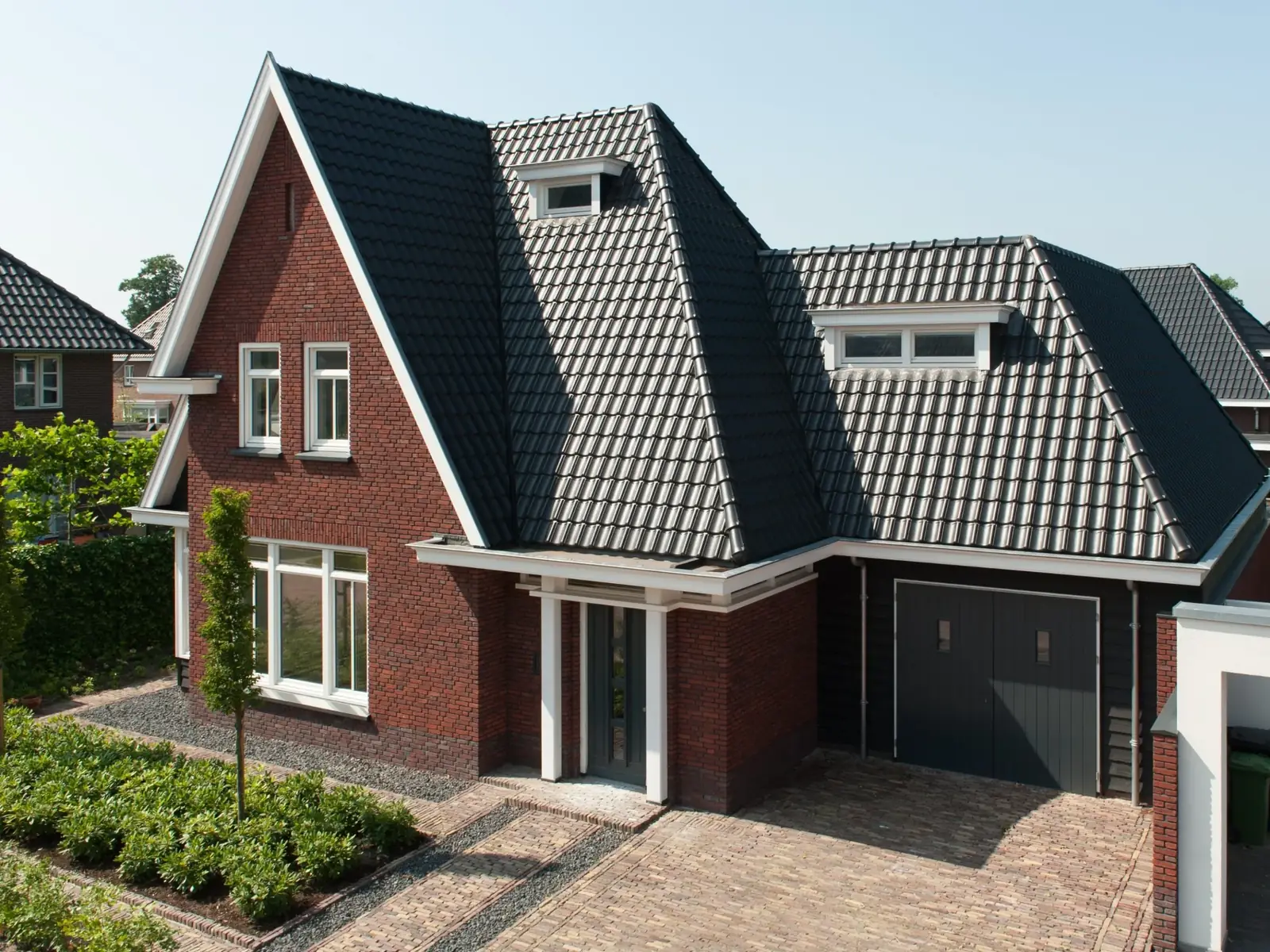
When homeowners or architects begin to investigate the top clay tile options, they frequently encounter a market divided by profile names—Mission, French, Interlocking—that obscure the technical reality of the product. The term “best” in this context is inherently subjective and site-specific. A common misunderstanding is that color is merely a surface treatment; in reality, the color of a high-quality clay tile is often integral to its composition, resulting from the specific clay blend or the application of ceramic glazes that fuse with the body during firing.
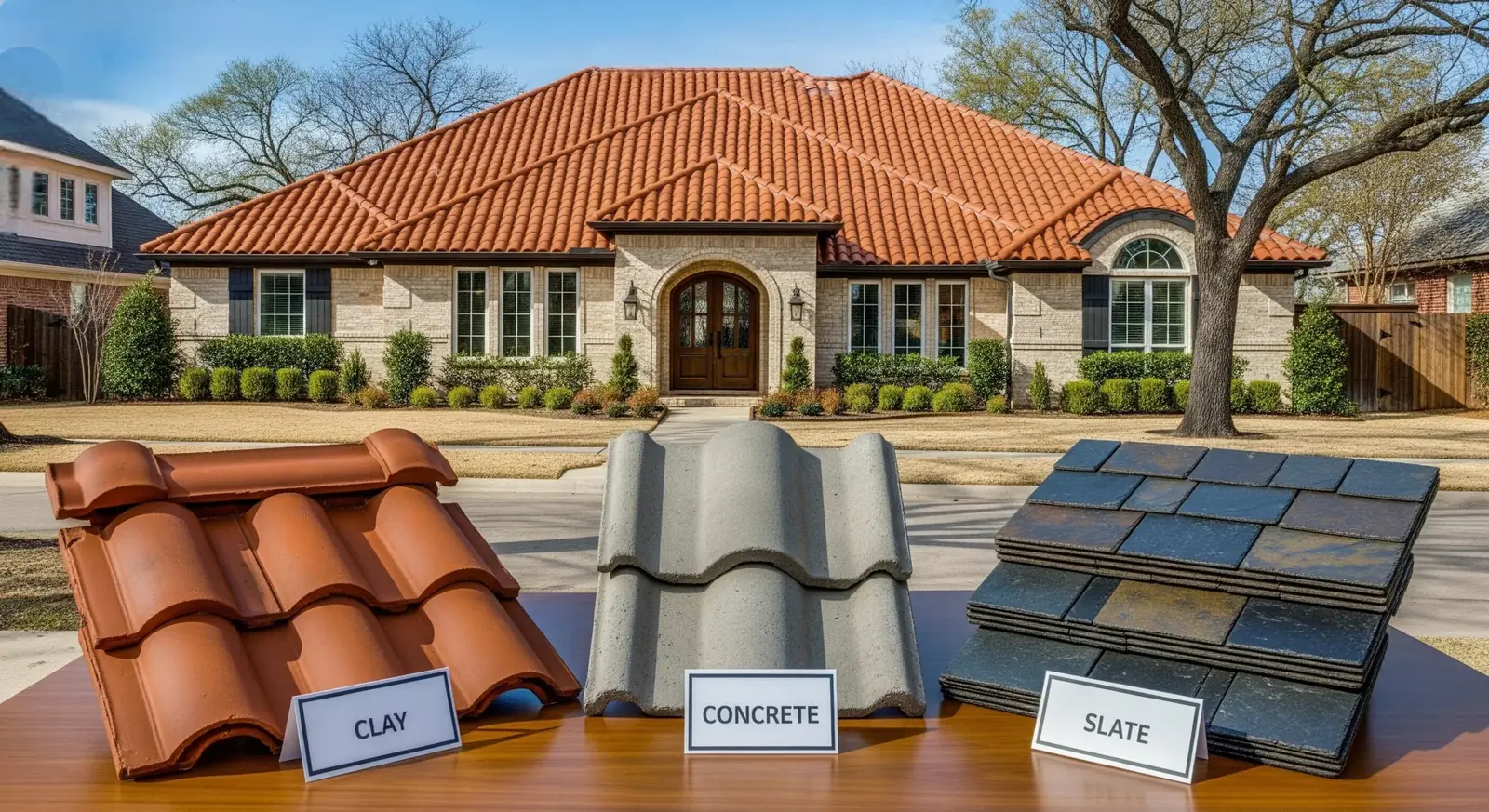
Oversimplification in this sector often leads to the conflation of clay with concrete. While both are heavy and durable, clay is significantly lighter (typically 30% to 40% less weight per square) and maintains its color indefinitely, whereas concrete tiles rely on pigments that can fade over decades. Evaluating the top clay tile options requires looking past the silhouette to the Grade rating. ASTM C1167 is the industry standard in the United States, categorizing tiles into Grades 1, 2, and 3 based on their ability to resist frost action. Grade 1 is the gold standard, intended for use in any climate, while Grade 3 is restricted to areas where frost is non-existent.
Risks of poor selection include “shaling”—the delamination of the tile surface due to water absorption and subsequent freezing—and structural deflection of the roof rafters if the weight-per-square was underestimated. Therefore, the search for the right tile is as much about structural engineering and regional meteorology as it is about historical accuracy or curb appeal.
Deep Contextual Background: The Evolution of Terra Cotta
The journey of clay roofing from Neolithic settlements to modern skyscrapers is a history of heat management. Early tiles were hand-shaped over the thighs of laborers, giving rise to the tapered “tegelas” of the Roman Empire. These were low-fired and porous, relying on steep pitches and heavy overlaps to shed water. The primary evolution occurred during the Industrial Revolution, where mechanized presses allowed for the creation of interlocking tiles. These designs used a series of channels and ridges to mechanically lock units together, significantly reducing the amount of overlap required and, consequently, the total weight of the roof.
In the 20th century, the focus shifted toward chemical refinement. Modern manufacturers now utilize “tunnel kilns” where temperatures are precisely controlled to achieve vitrification—the process where the clay particles melt and fuse into a glass-like, non-porous state. This technological leap allowed clay tiles to move into northern climates that were previously the sole domain of slate or wood shake. Today’s top options are engineered for high-wind resistance and fire safety, often achieving Class A fire ratings, making them indispensable in WUI (Wildland-Urban Interface) zones.
Conceptual Frameworks and Mental Models
To navigate the variety of available systems, one can apply three primary mental models:
1. The Thermal Mass Buffer
Think of the clay tile as a thermal battery. Unlike metal, which heats and cools almost instantly, clay has high thermal latency. It absorbs solar radiation during the peak of the day and slowly releases it during the night. In cooling-dominated climates, this prevents the “spike” of heat transfer into the attic, smoothing out the energy load on the HVAC system.
2. The Rainscreen Logic
A clay tile roof is not a “sealed” system. It is a “shedding” system. The framework here is a layered defense. The tile is the first layer, designed to shed 95% of the water. The second layer is the air gap, which provides pressure equalization. The third layer is the underlayment, which handles the residual moisture. If any layer is ignored, the system fails.
3. The “Permeability vs. Vitrification” Trade-off
There is a direct correlation between firing temperature and lifespan. Higher temperatures lead to higher vitrification (lower absorption), but can also cause more warping during the cooling process. The most advanced manufacturers find the “sweet spot” where the tile is nearly impervious to water but retains the perfect geometric tolerances required for interlocking profiles.
Key Categories and Variations
The market for clay tiles is generally categorized by the method of installation and the resulting aesthetic.
| Profile Type | Installation Method | Best For | Trade-offs |
| Two-Piece Mission | High-profile cap and pan | Historic restoration | Highest weight; labor-intensive |
| S-Tile (One-Piece) | Single unit mimics Mission | Mediterranean residential | Faster install; lower cost than Mission |
| French/Flat Tile | Interlocking tabs | Modern/European styles | Superior wind resistance; clean lines |
| Interlocking Shingle | Flat, overlapping units | Transitional architecture | Mimics slate or wood; very durable |
| Glazed Tile | Ceramic coating | Bold colors; maximum protection | High cost; slick surface for snow |
Decision Logic for Property Owners
In regions with high wind speeds (e.g., coastal Florida), French or Interlocking tiles are often preferred because their mechanical locks prevent the “chatter” or lifting that can affect traditional Mission tiles. For those in high-UV desert environments, a Two-Piece Mission tile provides the maximum air-flow beneath the tile, optimizing convective cooling. If the building is located in a heavy snow zone, flat interlocking tiles with snow guards are safer, as they reduce the risk of large “snow avalanches” common with high-barrel profiles.
Detailed Real-World Scenarios
Scenario 1: The Coastal Hurricane Zone
A residence in the Florida Keys requires a roof that can withstand 150 mph winds.
-
Constraint: High salt-spray environment and extreme wind uplift.
-
Decision Point: Selection of Grade 1 interlocking S-tiles with stainless steel hurricane clips and a reinforced self-adhered underlayment.
-
Failure Mode: Using standard nails instead of clips; the tiles may remain intact, but the uplift force pulls the nails through the deck.
Scenario 2: The High-Alpine Freeze-Thaw
A mountain lodge in Colorado seeks a permanent roofing solution.
-
Constraint: Daily temperature swings of 60 degrees and heavy snow loads.
-
Decision Point: High-vitrification, flat-profile tiles with an absorption rate of less than 1%.
-
Second-Order Effect: The weight of the tiles (plus snow) requires a structural retrofit of the trusses. However, the dark earth-tone tiles help melt snow through solar absorption.
Scenario 3: The Urban Infill Heat Island
A commercial building in Phoenix aims to reduce the “Urban Heat Island” effect.
-
Decision Point: Choosing “Cool Roof” rated clay tiles with high solar reflectance glazes.
-
Result: The roof remains 50 degrees cooler than a standard asphalt roof, significantly reducing the building’s contribution to ambient air temperature.
Planning, Cost, and Resource Dynamics
Clay tile is a front-loaded investment. While the initial cost is significantly higher than synthetic alternatives, the “annualized cost” over 75 years is usually the lowest in the industry.
| Cost Component | Typical Range (per sq. ft.) | Notes |
| Material Cost | $4.00 – $15.00 | Varies by profile and glaze |
| Labor (Install) | $8.00 – $20.00 | Higher for Mission/Two-piece |
| Structural Prep | $2.00 – $5.00 | Reinforcing rafters/trusses |
| Underlayment | $1.50 – $4.00 | High-temp membranes recommended |
Opportunity Cost: Choosing a cheaper material like asphalt shingles results in a 15-to-20-year replacement cycle. Over a 60-year horizon, a clay tile roof will cost roughly 50% less than three successive shingle roofs when inflation and labor increases are factored in.
Tools, Strategies, and Support Systems
A successful tile installation depends on a constellation of specialized tools and accessory materials:
-
Battens and Counter-Battens: A grid system that lifts the tile off the deck to allow for water drainage and air movement.
-
Bird Stops: Vented inserts that prevent avian nesting in the barrels of the tile while maintaining airflow.
-
Malleable Flashings: Lead or specialty polymer flashings that can be “dressed” to the irregular curves of high-barrel tiles.
-
Tile Saws: Diamond-blade wet saws are required for precision cuts at hips and valleys to ensure watertight transitions.
-
Hurricane Clips: Essential for high-wind zones, these secure the tail of the tile to the batten.
-
Ridge Venting Systems: Specialized closures that allow the attic to breathe through the ridge without allowing rain to enter.
Risk Landscape and Failure Modes
The primary risks associated with clay tiles are rarely material failures, but rather systemic ones:
-
Fastener Fatigue: Using galvanized nails in a coastal environment leads to “bleeding” and eventual failure of the attachment, causing tiles to slide off.
-
Underlayment Degradation: Because clay tiles last 100 years and standard felt underlayment lasts 20, the “internal” roof can fail while the tiles look perfect. This necessitates the use of high-temperature, synthetic, or modified bitumen membranes.
-
Point Loading: Walking on clay tiles without proper weight distribution can crack them. This is a common failure during HVAC or solar panel maintenance.
-
Efflorescence: A cosmetic risk where salts migrate to the surface of the tile, creating a white powdery film. While harmless, it can be mitigated by choosing tiles with low salt content in the source clay.
Governance, Maintenance, and Long-Term Adaptation
To ensure the performance of the top clay tile options, a rigorous monitoring cycle is required. Unlike “set-and-forget” systems, clay tile requires periodic stewardship.
Layered Maintenance Checklist:
-
Annually: Visual inspection of the ridge caps and hip tiles for movement. Clearing of valleys to prevent debris dams.
-
Biannually: Inspection of the “bird stops” and eave closures to ensure they haven’t been compromised.
-
Decadal: Inspection of the flashings around chimneys and skylights.
-
Adjustment Triggers: If a single tile is cracked, it should be replaced immediately. A cracked tile allows UV light to reach the underlayment, which will cause the membrane to fail prematurely in that specific spot.
Measurement, Tracking, and Evaluation
Evaluating the success of a clay tile installation involves both quantitative and qualitative metrics:
-
Leading Indicators: ASTM C1167 test results (absorption, break strength); verification of Grade 1 status; structural engineer’s sign-off on load capacity.
-
Lagging Indicators: Energy bill reductions (thermal mass effect); absence of leaks after a 10-year storm event; minimal color shift over 20 years.
-
Qualitative Signals: Acoustic dampening (clay tiles are excellent at blocking external noise like rain or traffic); aesthetic integration with the surrounding neighborhood.
Common Misconceptions and Oversimplifications
-
“Clay is too heavy for most houses.” Correction: While heavy, most modern homes can be retrofitted or designed for clay with minimal additional lumber.
-
“Tiles are fragile.” Correction: While they can break under a direct hammer blow, they are remarkably resilient to hail and can easily support the weight of a person if walked on correctly.
-
“Clay tiles are only for Spanish-style homes.” Correction: Flat interlocking clay tiles can mimic slate, wood shake, or even stone, making them suitable for ultra-modern or traditional English architecture.
-
“Concrete is the same as clay.” Correction: Concrete is a chemical bond; clay is a thermal/ceramic bond. They have vastly different lifespans and color retention properties.
-
“Clay tiles will fall off in an earthquake.” Correction: When installed with modern mechanical fasteners and clips, clay tiles perform excellently in seismic events.
-
“They are too expensive.” Correction: They have a higher price, but a lower cost over the life of the building.
Synthesis and Final Editorial Judgment
The decision to invest in clay tile is a decision to opt out of the planned obsolescence that defines much of the modern construction industry. While the market offers countless “top clay tile options,” the ultimate performance of the roof is dictated by the synergy between the firing quality of the unit and the technical precision of the under-deck assembly.
In a world increasingly characterized by climate volatility, the inherent fire resistance and thermal stability of clay provide a level of “passive survivability” that few other materials can match. For the discerning developer or homeowner, the premium paid for clay is an insurance policy against the rising costs of energy and the inevitable failure of shorter-lived materials. It is, quite literally, a roof for the ages—a rare instance where the oldest technology remains the most advanced.