Common Gutter Drainage Mistakes: A Professional Engineering Guide
Common gutter drainage mistakes the management of stormwater at the residential scale is often treated as a peripheral concern of home maintenance, yet it represents the most critical defense against the slow, hydraulic erosion of a building’s value. A gutter system is, in essence, a gravity-fed civil engineering project attached to a facade. When it functions, it remains invisible. When it fails, the failure modes—ranging from hydrostatic pressure against foundation walls to the saturation-induced decay of rafter tails—are often catastrophic and expensive.
The difficulty in perfecting roof drainage lies in the fluid dynamics of high-volume precipitation. Most systems are designed for average conditions, failing to account for the peak intensities of contemporary storm patterns. This discrepancy creates a scenario where standard installations become the site of systemic errors. Proper drainage requires a sophisticated understanding of pitch, volume-to-surface-area ratios, and the thermal expansion of disparate materials.
To address these vulnerabilities, one must look beyond the simple removal of debris. We must examine the entire hydraulic loop: from the roof’s coefficient of runoff to the soil’s infiltration capacity at the discharge point. An editorial inquiry into this topic reveals that “budget” or “standard” installations frequently overlook the second-order effects of water redirection. This article serves as a technical post-mortem of the most frequent points of failure, offering a rigorous framework for structural resilience.
Understanding “common gutter drainage mistakes”

The nomenclature of common gutter drainage mistakes often centers on the “clog,” yet professionals view the clog as a tertiary symptom rather than a primary cause. A deep understanding of these errors requires acknowledging that a gutter is not merely a collection tray; it is a conduit that must maintain a specific velocity of water to prevent sediment buildup.
A primary misunderstanding is the “Level Gutter” fallacy. While homeowners often prefer the aesthetic of a gutter that runs perfectly parallel to the roofline, physics demands a slope. An incorrectly pitched gutter—even one that is perfectly clean—is a failure of engineering because it allows for stagnant pooling. This leads to the acceleration of electrochemical corrosion in metal gutters and creates a breeding ground for biological growth that further impedes flow.
Furthermore, oversimplification occurs when we treat the downspout as the final destination. The most pervasive of the common gutter drainage mistakes is the failure of the “Exit Strategy.” Discharging water within three feet of a foundation is not drainage; it is merely relocation. True drainage planning involves managing the water until it reaches a grade that slants away from the structure or enters a dedicated subterranean storm lateral.
Deep Contextual Background: The Evolution of the Eave
Common gutter drainage mistakes historically, the eave of a building was designed to be deep. In traditional vernacular architecture, wide overhangs allowed water to fall clear of the foundation—a “drip-line” approach that required no gutters at all. As urban density increased and architectural styles shifted toward narrower eaves and complex rooflines, the need for integrated troughs became paramount.
The mid-20th-century introduction of seamless aluminum gutters revolutionized the industry by removing the weakest points in the system: the seams. However, this also introduced a “standardization” that ignored regional precipitation variations. A gutter profile that works in the arid Southwest is fundamentally inadequate for the convective downpours of the Southeast. We have reached a point where material availability often dictates design, leading to the systemic errors we see today where capacity is sacrificed for ease of installation.
Conceptual Frameworks and Mental Models Common Gutter Drainage Mistakes
To analyze drainage errors, we can apply several engineering mental models.
1. The Hydraulic Capacity Model
Every roof has a “Catchment Area” ($A$). The gutter must be sized based on the maximum predicted rainfall intensity ($i$) for that region. Failure occurs when $A \times i$ exceeds the gutter’s volume capacity. This is why “standard” 5-inch gutters often fail on steep-pitched, large-surface-area roofs.
2. The Velocity-Sediment Equilibrium
Water must move fast enough to carry small debris (granules, dust) out of the system. If the pitch is too shallow, velocity drops, sediment settles, and a “damming” effect begins. A budget-friendly but poorly pitched system eventually costs more due to the manual labor required to remove settled silt.
3. The Hydrostatic Pressure Loop
This model looks at the relationship between roof water and basement integrity. Water dumped near the foundation increases the pore-water pressure in the soil. This pressure eventually forces water through microscopic cracks in the masonry. Thus, gutter failure is a direct precursor to foundation failure.
Key Categories of Structural Failure Common Gutter Drainage Mistakes
| Category | Primary Error | Structural Consequence | Recovery Complexity |
| Geometry | Insufficient Pitch | Standing water; fascia rot | Medium (Re-hanging) |
| Volumetric | Undersized Troughs | Overshoot during peak rain | High (Replacement) |
| Termination | Short Downspouts | Foundation settlement | Low (Extensions) |
| Fastening | Improper Spacing | Gutter “pull-away” under ice/snow | Medium (Structural repair) |
| Integration | Behind-Drip-Edge Gap | Water wicking into roof deck | High (Roofing repair) |
Decision Logic for Remediation
When a system fails, the first question should not be “how to fix it,” but “where did the water go?” If the water remained in the trough, it is a pitch/volume issue. If the water went behind the trough, it is a flashing/integration issue. If the water cleared the trough but hit the foundation, it is a termination issue.
Detailed Real-World Scenarios Common Gutter Drainage Mistakes
Scenario 1: The “Waterfall” Effect on In side Corners
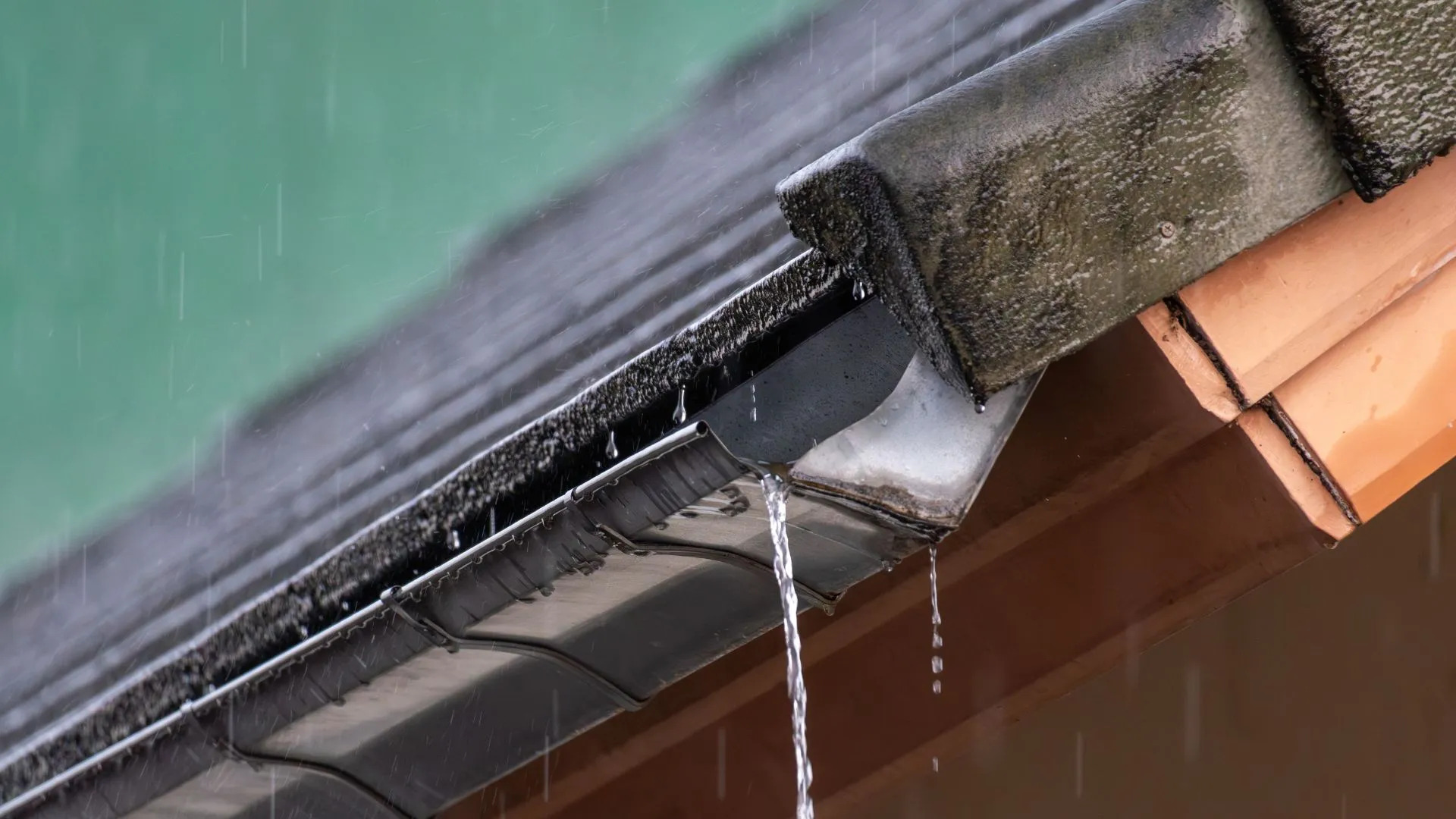
In many modern suburban homes, two large roof planes meet at an inside valley. During heavy rain, the concentrated volume of water gains significant momentum.
-
The Failure: Standard miters cannot handle the turbulence. Water “overshoots” the corner.
-
Second-Order Effect: Soil erosion at the corner leads to a “settling” of the porch or foundation in that specific quadrant.
-
Lesson: Inside valleys require high-capacity “splash guards” and oversized downspouts.
Scenario 2: The Ice Dam/Gutter Synergy
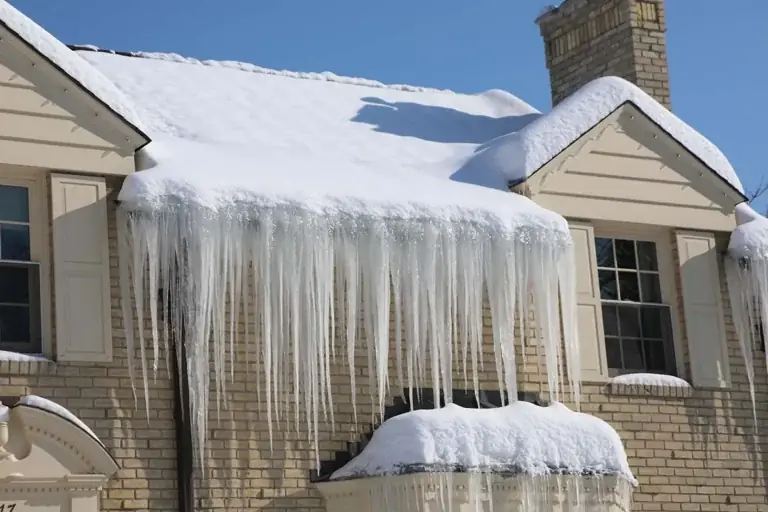
In northern climates, a gutter filled with stagnant water freezes.
-
The Failure: This ice block prevents meltwater from leaving the roof. The water backs up under the shingles.
-
Result: Interior ceiling damage and the destruction of the gutter’s fastening system due to the sheer weight of the ice.
Planning, Cost, and Resource Dynamics
The cost of correcting drainage mistakes is often overshadowed by the “Opportunity Cost” of ignoring them.
Estimated Intervention Costs Common Gutter Drainage Mistakes
| Activity | Direct Cost | Indirect Savings | Risk of Deferral |
| Re-pitching | $200 – $500 | Prevents $2k fascia repair | Chronic stagnant water |
| Downspout Burial | $1,000 – $3,000 | Prevents $15k foundation fix | Foundation wall bowing |
| Gutter Guard Install | $1,500 – $4,000 | Reduces annual labor costs | Only works if pitched correctly |
| Full Upsizing (6″) | $2,500 – $6,000 | Total system resilience | Structural water damage |
Tools, Strategies, and Support Systems
-
Digital Inclinometers: For ensuring a precise 1/16″ drop per foot of run.
-
Splash Blocks and Bubbler Pots: For aesthetic and functional water dispersion at the end of the line.
-
Hidden Hangers with Screws: Replacing the “spike and ferrule” method which inevitably pulls out of the wood.
-
Heat Cables: A specialized tool for preventing the freezing failure mode in alpine environments.
-
Drip Edge Extensions: Essential for bridging the gap between the roof’s edge and the gutter trough.
Governance, Maintenance, and Adjustment Triggers
A “Governance” approach to gutters means moving from “cleaning when they look full” to a scheduled review of hydraulic performance.
The Layered Checklist Common Gutter Drainage Mistakes
-
Spring Review: Check for “shadowing” on the fascia (indicates overflow) and ensure the winter snow load hasn’t bent the hangers.
-
Peak Rain Test: Observe the system during a significant storm. Look for “overshoot” at the valleys and “leaking” at the end caps.
-
Fall Clean-out: Ensure the downspout “elbows”—the most common location for hidden clogs—are clear.
Common Misconceptions and Oversimplifications
-
Myth: “Gutter guards mean I never have to check my gutters again.”
-
Correction: Guards can actually hide issues, allowing silt to build up beneath them or causing water to “skim” over the top during heavy rain.
-
-
Myth: “Seams are fine if you use enough caulk.”
-
Correction: Caulk is a temporary sealant subject to UV degradation and thermal expansion. Seamless is the only long-term structural solution.
-
-
Myth: “Downspouts should always be at the ends of the house.”
-
Correction: Downspout placement should be determined by roof volume, not just the corners of the architecture.
-
Synthesis: The Future of Residential Drainage
Correcting common gutter drainage mistakes is fundamentally about respecting the volume of water a modern roof collects. A one-inch rain on a 2,000-square-foot roof produces approximately 1,250 gallons of water. Managing this volume requires a professional engineering mindset.
As climate patterns shift toward more frequent “extreme precipitation events,” the margins for error in our drainage systems are shrinking. We must move toward systems that are “over-engineered” for today so they are sufficient for tomorrow. Resilience in this context is not a luxury; it is the baseline requirement for preserving the structural health of the American home.